
BizTech Law Blog
 Here in the U.S., we continue to wait for the SEC to issue regulations before we can use investment based crowdfunding under the JOBS Act. In the meantime, investment crowdfunding has been available in the UK for two years.
Crowdcube, a UK based crowdfunding portal, recently released its results after two years of operations:
 Michigan’s new law, the Internet Privacy Protection Act (IPPA), protects employees, potential employees, students and applicants from giving employers and educators access to their personal social media accounts. Under the new law, accounts such as Gmail, Facebook, Twitter, Tumblr or Twitter are covered. Employers and school administrators can’t discharge, fail to hire or admit or otherwise penalize their current or potential employees or students for refusing their request.
On January 10, 2013, FINRA (the Financial Regulatory Authority) issued a voluntary Interim Form for Funding Portals. Under the JOBS Act, once the SEC adopts its crowdfunding regulations and equity crowdfunding becomes legal in the United States, equity crowdfunding portals will be required to become members of FINRA. FINRA currently regulates broker-dealers.
In the meantime, FINRA is requesting confidential information from equity crowdfunding portals that it can use to help it develop the rules it will impose on portal members. Click here for the FINRA release and link to the form (We have identified that the following link is no longer active, and it has been removed).
 The Lansing Chapter of the Michigan Technology Network (MITN) is teaming up with DemoCamp for a holiday tech event. Sponsored by Foster Swift, DemoCamp Lansing will bring together local programmers, entrepreneurs and community members to show off cool products and websites and to learn about new technology. This relaxed and casual event is free and will be held at the Michigan Historical Museum on Wednesday, December 12, 2012 at 5:30pm.
The SEC has a very large task ahead of it in order to complete adoption of the regulations required under the JOBS Act.
One provision of the JOBS Act permits general solicitation of investors by a company if only accredited investors are allowed to invest. This will permit the use of a web portal or other electronic platform for the solicitation of accredited investors. Congress gave the SEC a deadline of July 4, 2012 to adopt regulations specifying the steps a company is required to take in order to clearly establish that each investor is accredited. The SEC proposed these regulations on August 29, 2012. Because the SEC had invited comments before the proposed regulations were issued and those comments were factored into the proposed regulations, we had anticipated that final regulations would issue soon after expiration of the comment period.
 It might be illegal to sell those treasures.
The excitement of the hunt for the perfect item at the flea market or the thrill of selling your relative’s antique lamp at a great price could soon be dimmed by the Supreme Court of the United States.
 It is undeniable that the internet is here to stay, playing an increasingly critical role in our ability to obtain and disseminate information. No matter the application – business, entertainment, politics, etc. – the internet has become a staple of everyday life. For many individuals with disabilities, however, navigating the internet can be a less than satisfying endeavor.
 Crowdfunding, some would say, is the new social networking platform of raising money from people online. While crowdfunding is a relatively new term and concept, traditional principles of law still apply. Artists, startups and online creators using this new platform are governed by Intellectual Property principles.
Intellectual Property (IP) refers to the creations of the mind; and most commonly include ideas or inventions, literary and artistic works, symbols that identify your brand, names, logos and/or competitive business ideas or information. Under this broad umbrella of Intellectual Property, there are generally four categories that govern the use of Intellectual Property:
- Trademarks
- Patents
- Copyrights
- Trade Secrets
Before pitching or disclosing your concept to an online crowdfunding community to raise money these four categories of protection and the potential resulting consequences should be thoroughly examined. Failure to do so could result in the inadvertent theft, infringement or forfeiture of your IP rights. Let's take a deeper look at these four categories.
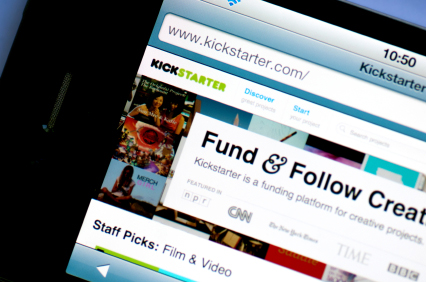 The JOBS Act, which became law on April 5, 2012, included for the first time in the U.S., a legal structure that will permit the use of general solicitation in connection with small, non-registered investment offerings in the context of crowdfunding. The SEC still needs to adopt implementing regulations before this funding vehicle becomes available and the market decides if it is viable. This will take several months, if not a year. In the meantime, and even after investment crowdfunding becomes available, regular, non-investment crowdfunding may be a viable alternative for your enterprise.
 The JOBS Act, which became law on April 5, 2012, included for the first time in the U.S., a legal structure that will permit the use of general solicitation in connection with small, non-registered investment offerings in the context of crowdfunding. The SEC still needs to adopt implementing regulations before this funding vehicle becomes available and the market decides if it is viable.
The title of the JOBS Act dealing with crowdfunding sets out a framework, but requires the SEC to fill in the details by adopting regulations. There are far too many topics for which the SEC is required to adopt regulations to provide a complete list in this article. But examples include regulations that:
