
BizTech Law Blog
See also Recommendations on AI and Copyrightability from the U.S. Copyright Office’s Latest Report
It is no surprise that generative artificial intelligence (“AI”) is changing the way companies all over the world operate. Some are embracing it with open arms and finding consistent opportunities to integrate AI into the workplace. Other businesses have found themselves at a standstill in terms of incorporating AI into their preexisting tools and technology, wondering whether embedding AI into their systems is a necessary step to stay relevant or one that may take them away ...
 With the rise of generative artificial intelligence (AI) and its various synthetic media outputs, deepfakes are just one of many new risks to businesses. Deepfakes pose considerable threats to companies, potentially damaging reputation, trust, and financial stability through malicious impersonation and manipulation of digital content.
 Through tactical litigation practices, copyright trolls rely on copyright law to allege infringement and threaten major statutory damages upon unsuspecting defendants. The term “copyright troll” is an unflattering nickname for someone who manipulates the intellectual property (“IP”) laws to force a “toll” by way of a settlement payout on market participants.
The AI Revolution is here! Startups across our region are using AI tools in innovative new ways. But could there be legal pitfalls you haven’t considered?

This blog has since been updated with new information
What is eligible for patent protection?
In the U.S., what is known as a "general utility patent" or what most people typically imagine a patent to be, protects the use and function of an invention. Processes, machines, articles of manufacture and compositions of matter are all patent eligible. You cannot get a patent for an abstract idea or something that you discover in nature; you have to have a true physical invention or a process that creates a transformation of some kind in order to be eligible.
Planning on starting your own business? One of the first things that you should do is select a trademark.
 On March 22, 2017, in a 6-2 decision, the U.S. Supreme Court affirmed a ruling by the Sixth Circuit Court of Appeals in the case of Star Athletica LLC v. Varsity Brands Inc. that two-dimensional graphic designs are entitled to copyright protection as “pictorial, graphic, and sculptural works” under the copyright law for useful articles under certain circumstances. It is the first time that the Supreme Court has addressed copyright protection for apparel, and the ruling bolsters legal protections for members of the fashion and apparel industries.
 The U.S. Copyright Office recently implemented new rules (the “Rules”) governing the designation and maintenance of Digital Millennium Copyright Act (“DMCA”) agent information under a new electronic system. The Rules went into effect on December 1, 2016, so electronic designations should be filed as soon as possible. Service providers who fail to submit electronic designations will be ineligible for the safe harbor protections from copyright-infringement liability provided by the DMCA.
 Organizations within the entertainment industry have a unique set of legal considerations. To better understand these considerations, Attorney John Mashni is presenting an introductory and advanced level course on the "Legal Aspects of a Feature Film," and a course on "The Law of Music" to the NALA Paralegal Association at their annual conference and expo. The NALA annual conference is taking place in Las Vegas July 13 through July 15.
When it comes to copyrights, there are several common mistakes small businesses can make. If you are putting together marketing materials or a website and you download a photo online, often times that photo is protected by a copyright and is owned by someone else. This could lead to copyright infringement. Learn about a few other common copyright mistakes in the video below.
Business owners need to understand copyrights. The video below continues Foster Swift's Legal Basics for Business Video Series by explaining the basics of copyrights. Learn more about copyrights and how they are important to your business in this short video clip.
 Tech continues to test the elasticity of the law and use case precedent as its own disruptor. The Google Goliath, YouTube, is moving forward to pay several video content creators’ legal fees in copyright infringement disputes that use the defense of fair use.
A copyright is an expression of an original idea through words, music, pictures, computer programs, or any other method conveying ideas as works of authorship. The copyright is governed by federal law and is, unlike many of our laws, explicitly identified in the U.S. Constitution. A copyright gives authors the exclusive control of their works of authorship, including derivative rights. An author controls whether or not the copyright – work of authorship - may be used or displayed.
There is, currently, one minor exception: fair use.
There are four basic kinds of intellectual property that you can protect: trademarks, copyrights, patents and trade secrets. At the very early stages of starting a business you will want to protect your business name or brand through a trademark. Learn more about intellectual property basics and what you need to protect, in the Youtube video below.
A copyright is automatically created upon the completion of an original work of authorship that is fixed in a tangible medium of expression. While an automatic copyright protects that work, a formal registration of copyrighted materials within three months of release to the general public provides extra benefits that can prove extremely valuable to the owner. These benefits serve to not only protect the copyrighted work, but also to provide additional remedies for the author in the event of infringement. Registering a copyright is as simple as submitting an application to the United States Copyright Office with a minimal filing fee and a copy of the copyrighted material. Then, once the work is registered, the benefits begin immediately.
 On June 25, 2014, the United States Supreme Court ruled that cloud-based television-streaming service, Aereo, violated U.S. copyright law and its subsequent Chapter 11 bankruptcy filing has come to a dramatic conclusion. We have followed this case throughout its lifecycle, and updated this blog with posts like this one to keep you up-to-date on its implications for copyright and telecommunications regulations. Now, as reported by Inc. and other media, the company’s sale of its technology – once considered disruptive and wildly innovative – for a “disappointing” $2 million brings the technology company’s story to an end.
Following the Supreme Court’s ruling, Aereo filed for bankruptcy, and recently conducted an auction sale of its intellectual property and hardware in order to raise funds to pay creditors. The company sold its name and customer list to TiVo, and its patent portfolio to RPX Corporation, which has been categorized by some as a patent troll. Aereo sold off its remaining equipment to Alliance Technologies. Aereo had expected the sale to raise up to $40 million.
In a prior post we reported that in June the U.S. Supreme Court ruled that streaming television service, Aereo, violated U.S. copyright law in connection with its business and legal battle with the major broadcast networks. At the time, we posed the question of whether, despite losing the lawsuit, Aereo had a future as a cable company?
The answer, it seems, is no. On November 20, Aereo filed for Chapter 11 bankruptcy protection in the U.S. Bankruptcy Court for for the Southern District of New York, listing assets of $20.5 million and debt of $4.2 million.
On June 25, 2014, the Supreme Court ruled that streaming television service, Aereo, violated U.S. copyright law. In American Broadcasting Companies v. Aereo, Inc., the Court overruled the U.S. Court of Appeals for the Second Circuit, holding that Aereo performs TV broadcasters works publicly within the meaning of the 1976 Copyright Act (the "Act").
 Raging Bull is a cult classic boxing film that depicts the life story of Jake Lamotta, a hard-charging, volatile boxer from the Bronx. The film was directed by Martin Scorsese and starred Robert Deniro as Lamotta, a role which garnered Deniro an Academy Award for best actor.
A copyright infringement case involving Raging Bull that has wound its way through the courts recently took "center ring" at the U.S. Supreme Court. In the case, Petrella v. Metro-Goldwyn Mayer, Inc., the Court considered the question of whether the doctrine of laches is available as a defense to copyright infringement. On May 19, 2014, Justice Ginsberg issued a 6-3 opinion holding that laches is not a defense to a claim for copyright damages. Justices Breyer, Roberts and Kennedy dissented.
 The Seventh Circuit Court of Appeals has recently affirmed a decision stating that many of the older Sherlock Holmes stories by Sir Arthur Conan Doyle are in the public domain. The court held that just because later versions of a character are still protected by copyright, does not mean that the copyrights in those earlier stories continue to exist beyond the copyright term. The Doyle estate argued that the later stories added to the "complexity" of the characters and should provide some measure of protection.
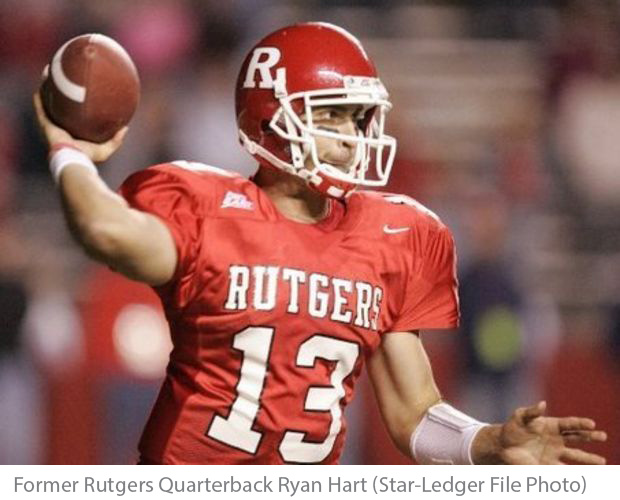 Ryan Hart is the former starting quarterback for Rutgers University. In addition to setting a number of school records and leading his team to its first bowl appearance since 1978, Hart has added a victory in the courtroom against Electronic Arts ("EA") to his list of accomplishments. In their NCAA Football series, EA Sports provides users with a realistic gameplay experience. Part of this realistic experience is characters that resemble real-life players. So when a player chooses Rutgers, the quarterback is number 13, is 6'2", weighs 197 pounds, and appears wearing a visor and an armband on his left wrist—the resemblance to Ryan Hart is nearly exact. In October of 2009, Hart filed suit against EA Sports for violating his right of publicity by using his appearance in the game.
 It might be illegal to sell those treasures.
The excitement of the hunt for the perfect item at the flea market or the thrill of selling your relative’s antique lamp at a great price could soon be dimmed by the Supreme Court of the United States.
 Crowdfunding, some would say, is the new social networking platform of raising money from people online. While crowdfunding is a relatively new term and concept, traditional principles of law still apply. Artists, startups and online creators using this new platform are governed by Intellectual Property principles.
Intellectual Property (IP) refers to the creations of the mind; and most commonly include ideas or inventions, literary and artistic works, symbols that identify your brand, names, logos and/or competitive business ideas or information. Under this broad umbrella of Intellectual Property, there are generally four categories that govern the use of Intellectual Property:
- Trademarks
- Patents
- Copyrights
- Trade Secrets
Before pitching or disclosing your concept to an online crowdfunding community to raise money these four categories of protection and the potential resulting consequences should be thoroughly examined. Failure to do so could result in the inadvertent theft, infringement or forfeiture of your IP rights. Let's take a deeper look at these four categories.
 The Commercial Felony Streaming Act (S.978) is pending introduction to the United States Senate. If S.978 is passed, it would make the unauthorized streaming of copyrighted material a felony punishable by up to five years in prison.
The potential passage of S.978 has sparked fears that artists like Justin Bieber (who began his quest toward pop stardom by singing covers on YouTube!) could end up in jail. DemandProgress.org has even argued that S.978 could shut down Twitter, YouTube! and other popular sites.
 What is "intellectual property" and why should it matter to your business? At the most basic level, "intellectual property" is one of an organization's most valuable assets. Intellectual property frequently differentiates extraordinary companies from "average" organizations. For that reason, IP must be zealously protected. IP breaks down into four areas: patents, trademarks, copyrights, and trade secrets.
If you own or are operating a video or file sharing website that utilizes another's content (read another's copyrights) the following case presents you with a valid defense. If you are the user whose copyright has been infringed, this law is worth knowing before proceeding with costly litigation.
Veoh Networks - a video hosting website - sought protection under the Digital Millennium Copyright Act's safe harbor provision against a user's infringement claims. The user claimed Veoh (1) knew of and failed to remove infringing videos uploaded by other users; (2) had the ability to control infringing activity on its system; and (3) that its infringer policy was inadequate.
