
BizTech Law Blog
 The ongoing pandemic has wreaked havoc on the film industry, with most theaters shut down in 2020. Even now, many blockbuster films have gone straight to streaming services.
One local filmmaker's vision began nearly a decade before the COVID pandemic. It all started with another tragic disaster, but from that disaster, a story unfolded and inspired a film project.
 The short answer is that it depends, but it is usually advisable and sometimes required. Let’s dig deeper.
Initially, let’s discuss what a PPM is. A PPM is a document that discloses information regarding the company that is seeking to raise investment capital. In some ways, it is like a business plan, but with detailed additions for investment risk factors, securities law provisions, and the proposed terms of investment. PPMs go by a variety of names – including confidential information memorandums (CIMs) and offering memorandums.
 In a previous blog post, we discussed the key highlights of the new Title III crowdfunding rules. In short, businesses are now permitted (subject to certain rules and restrictions) to use equity crowdfunding to offer and sell securities to non-accredited investors.
One of the key investor protections of Title III is that crowdfunding transactions must take place through an SEC-registered intermediary – either a funding portal or a registered broker-dealer. Broker-dealers are likely to be hesitant to serve as an intermediary in a Title III crowdfunding campaign. The reason is that broker-dealers are subject to extensive rules and regulations. Broker-dealers usually pass along their regulatory compliance costs to customers. However, Title III crowdfunding campaigns involve such small amounts (i.e., $1 million or less) that broker-dealers will likely find it unprofitable to serve the market.
The long awaited SEC Title III crowdfunding final rules have arrived.
The new rules will open the equity crowdfunding gates to non-accredited investors. Non-accredited investors include individuals: (A) with a net worth less than $1 million, or (B) who have an annual gross income of less than $200,000 (or $300,000 together with their spouse). In other words, businesses will now be permitted to utilize crowdfunding to raise capital by selling their securities to “everyday folks.”
Below are some of the key highlights from the new rules.
What does a startup entrepreneur need to know about financing a company? The entrepreneur needs to work with an adviser or accountant to create a realistic budget. Watch the video below to learn more about your options.
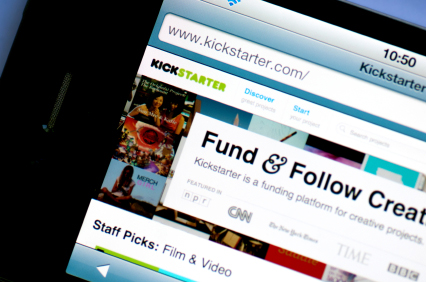
A drink cooler that doubles as a blender and stereo system. A card game called “Exploding Kittens” for “people who are into kittens and explosions and laser beams and sometimes goats.” A motion picture starring Kristen Bell. These are a few of the inventions and initiatives that have received the most funding on Kickstarter, the popular crowdfunding site.
Kickstarter is an online platform that allows project creators to seek financial backing. If people like a project, they can pledge money to make it happen. Funding on Kickstarter is all-or-nothing - a project must meet its funding goal to receive any money at all.
I have previously written about the tax implications of Kickstarter campaigns here.
While there’s always a risk that a project won’t make it from concept to completion, most backers have an expectation that their monetary pledge will be used in good faith and for its intended purpose.
What is crowdfunding? Is it legal? Learn the response to these questions and much more in this short video clip:

The term “offer” is broadly defined under the securities laws as "every attempt or offer to dispose of, or solicitation of an offer to buy . . . for value." An offer, even without completion of the sale of securities, can run afoul of the securities laws.
An interesting case from 2011 punctuates this point and demonstrates the risks of unknowingly violating securities laws. Two advertising executives hatched an innovative, although imprudent, plan to purchase Pabst Brewing Company by offering to sell shares on Facebook and Twitter to cover the $300 million cost of the transaction. The campaign, which may have begun as simply a publicity stunt, was wildly successful, attracting five million pledging $200 million. A bit too successful, it turns out.
The SEC soon took notice and halted the campaign via a Cease and Desist Order due to a violation of securities laws by the ad men. They failed to register the public offering with the Securities and Exchange Commission (SEC) and could not meet an exemption. A settlement was reached and the men, who never actually collected any money, paid a fine and agreed to stop selling shares to the public.
The SEC, which has an entire enforcement unit devoted to Internet surveillance, is paying increasing attention to online activity. By law, public offerings - online or otherwise - must be registered with the SEC or meet an applicable exemption before promoters begin to offer or sell shares.
On October 22, 2014, Governor Snyder signed Public Act 355 of 2014 into law. The cardinal rule of securities laws is that a person cannot sell a security unless the security is: (A) registered, or (B) exempt from registration. Public Act 355 creates a new exemption for secondary sales facilitated by a Michigan Investment Market.
Kickstarter is a crowdfunding platform for creative projects. It has helped a wide range of people fundraise to help finance a variety of projects. Often time people overlook the tax implications to successful Kickstarter campaigns.
Since the passing of the Crowdfunding Act in December 2013, many questions concerning the applicability of the law have surfaced. This past month, the Michigan Municipal League launched CrowdfundingMI.com, a website pertaining to crowdfunding in Michigan. It is an excellent resource intended to answer basic questions and importantly, aimed to help local businesses connect with investors. The website provides general information, along with frequently asked questions, and tutorials regarding the benefits of crowdfunding
Part 1 and 2 of this series discussed the basic requirements that must be met to utilize Michigan’s new intrastate crowdfunding exemption.
This post will discuss the definition of an “accredited investor.” The distinction between accredited and non-accredited investors is important. Non-accredited investors cannot invest more than $10,000 under Michigan’s new intrastate crowdfunding exemption. Accredited investors, on the other hand, are not subject to the $10,000 investment cap.
Part 1 of this series discussed the 12 basic requirements that must be met to utilize Michigan’s new intrastate crowdfunding exemption.
This post will take a deeper look at Requirement 2. As noted in Part 1, Requirement 2 states that the offer must meet the requirements for the federal exemption for intrastate offerings under Section 3(a)(11) of the Securities Act of 1933 (the “1933 Act”).
Note: This post is Part 1 of a multi-part series regarding Michigan's new crowdfunding law
It's official, crowdfunding is legal in Michigan. So, what does that mean for your business? Let's start with the basics.
Federal and state law prohibit a business from selling a security unless: (A) the security is registered with the SEC, or (B) an exemption from registration is applicable. Registration is expensive, so nearly all businesses try to satisfy an exemption from registration. Historical exemptions have made it difficult for businesses to receive investment from "non-accredited" investors and flat out prohibit "general solicitation" (i.e., public advertising of the investment, including advertising on the Internet). Those historical difficulties, however, have recently been eased.
Posting of Issuer Disclosures. In prior blog posts, we described the disclosure obligations imposed on the issuer (the company that is raising capital) under the SEC's proposed crowdfunding regulations. (Read: The SEC Crowdfunding Proposed Regulations: Overview of Offering Statement & Non-Financial Disclosure Requirements and The SEC Crowdfunding Proposed Regulations: Overview of Issuer Financial & Disclosure Requirements). The proposed regulations impose certain requirements on the funding portal to make sure that these issuer disclosure obligations are met. Specifically:
In the release accompanying the proposed crowdfunding regulations, the SEC explains its view that Congress anticipated that crowdfunding would occur exclusively through electronic media. The SEC's proposed rules are intended to facilitate the exclusive use of electronic media.
Under the proposed rules, before an investment commitment may be accepted by an intermediary, the intermediary must require the investor to:
- Open an account with the intermediary; and
- Provide a consent to the electronic delivery of materials.
The SEC's proposed crowdfunding regulations include a number of specific steps that an intermediary is required to take in order to reduce the risk that an issuer (the company raising capital) does not use the intermediary's platform to engage in fraud. The intermediary is viewed as a check and balance on the crowdfunding marketplace. Among an intermediary's responsibilities are the following:
Reminder: The SEC public comment period is coming to a close Feb. 3, 2014.
Neither a funding portal, nor its officers, directors, partners or persons occupying a similar status with the funding portal, are allowed to:
- Have any type of financial interest in an issuer (the company raising capital) who is selling securities through the funding portal’s platform; or
- Receive a financial interest in an issuer as compensation for services provided to or for the benefit of an issuer in connection with the offer and sale of securities.
The role of a funding portal is to facilitate a crowdfunded transaction involving a sale from the issuer (the company raising capital) to the investor. A funding portal does not have the legal authority to facilitate secondary market activity, i.e., bringing together a seller and buyer in a transaction in which the seller is an investor who previously acquired the security either from the issuer or from another investor. In order to legally facilitate secondary market transactions, the intermediary would have to register as an exchange or alternative trading system. A funding portal registration does not grant this authority.
We continue our series on the proposed crowdfunding regulations issued by the SEC on Oct. 23, 2013 by turning our attention to the portion of the proposed regulations that relate to intermediaries of crowdfunding transactions.
An "intermediary" is the facilitator of a crowdfunding transaction through which issuers offer to sell securities and investors sign up to purchase securities. A registered broker may act as a crowdfunding intermediary. The activities involved in acting as an intermediary are already within the scope of the licensed activities of a registered broker.
Issuer Advertising. Because of restrictive language in the JOBS Act, the SEC's proposed crowdfunding regulations impose significant restrictions on the issuer's ability to advertise the offering. (The "issuer" is the company raising capital.) Any advertisement, other than an advertisement posted on the intermediary platform, whether provided in an e-mail blast, published on the issuer's or a third party's website, posted on a social media site, published in print media, or broadcast on television or radio, must direct prospective investors to the intermediary's platform and cannot include anything other than the following information:
- A statement that the issuer is conducting an offering pursuant to Section 4(a)(6) of the Securities Act, the name of the intermediary, and a link to the intermediary's platform.
- The terms of the offering; i.e., the amount of securities offered, the nature of the securities, the price at which the securities are offered, and the closing date of the offering period.
- The name, address, phone number and website URL of the issuer.
- A brief description of the issuer's business.
- The e-mail address of a representative of the issuer.
The issuer may, however, communicate with investors and potential investors about the terms of the offering through communication channels provided by the intermediary on the intermediary's platform, so long as the issuer identifies itself as the issuer. The proposed crowdfunding regulations do not restrict issuer communications other than those that refer to the terms of the offering.
Progress Updates
During the course of a crowdfunding offering, the proposed SEC crowdfunding regulations require the issuer (the company raising capital) to provide a progress update no later than five business days after the issuer reaches one-half of its targeted offering amount, and again after the issuer reaches 100 percent of its targeted offering amount. If the issuer will accept proceeds in excess of the targeted offering amount, a third progress report will have to be filed no later than five business days after the offering deadline.
The progress update is to be provided on Form C: Progress Update (Form C-U). Click here to see a copy of proposed Form C.
The issuer will be required to file the Progress Update with the SEC on EDGAR, provide a copy to the issuer’s intermediary and investors signed up to date, and if the offering is continuing, make the Progress Update available to potential investors.
In a crowdfunding offering, the financial information the issuer (the company that is raising capital) is required to disclose will be determined in part by specific requirements built into the JOBS Act, and in part by SEC regulation. The proposed crowdfunding regulations include the following financial disclosure requirements:
As is always the case, in the SEC's proposed crowdfunding regulations, the information an issuer (the company that is raising capital) is required to include in its offering statement is quite detailed. We present a high level overview below.
Deadline for Comments. The SEC's proposed crowdfunding regulations have now been published in the Federal Register. The deadline for submitting comments is February 3, 2014. As noted in our prior article, comments can be submitted electronically through the SEC's website, sec.gov, and at times, the SEC chooses to extend the comment period.
Format for Issuer Disclosures. Under the JOBS Act, the issuer (the company raising capital) must file specific disclosures with the SEC, and provide these disclosures to investors and the registered intermediary hosting the offering. The proposed regulations require the disclosures filed with the SEC to be filed through EDGAR (the SEC's Electronic Data Gathering Analysis and Retrieval System) on a new Form C.
As a reminder, under the JOBS Act, each investor is limited as to how much the investor can invest in an issuer (the company raising capital) using the crowdfunding exemption during a 12-month period of time. There were some ambiguities in the language of the Act. The SEC proposes to clarify the ambiguities such that the limitations are as follows:
- If the investor’s annual income and net worth are both less than $100,000, the investor may only invest the greater of $2,000 or 5% of the investor’s net worth during a 12-month period.
- If either the investor’s annual income or the investor’s net worth exceeds $100,000, the investor may only invest the greater of 10% of the investor’s net worth or 10% of investor’s annual income, but not to exceed $100,000 during a 12-month period.
 Have you heard? The Securities and Exchange Commission has voted to propose rules under the JOBS Act permitting companies to offer and sell securities through crowdfunding. Public comment on the proposed rules will be sought for a 90-day period following the publication in the Federal Register by the SEC. Crowdfunding is a new way of raising money from people online, some would even say a new social networking platform.
Is your company thinking about utilizing crowdfunding? Before you venture into this new opportunity contact your Foster Swift attorney and make sure you comply with the new rules. Contact Attorney John Mashni at 517.371.8257 or jmashni@fosterswift.com.
 As noted in a prior blog article, investment crowdfunding is awaiting SEC regulations. However, “reward” and “experience” based crowdfunding via websites such as Kickstarter have seen success.
On March 13, 2013, Rob Thomas, the creator of Veronica Mars, launched a Kickstarter project to fund the making of a Veronica Mars movie. Veronica Mars was previously a television show on UPN that aired from 2004 to 2007. It took only 11 hours for the project to meet its funding goal of $2 million dollars. The initial fundraising goal was to raise $2 million in 30 days.
 Here in the U.S., we continue to wait for the SEC to issue regulations before we can use investment based crowdfunding under the JOBS Act. In the meantime, investment crowdfunding has been available in the UK for two years.
Crowdcube, a UK based crowdfunding portal, recently released its results after two years of operations:
On January 10, 2013, FINRA (the Financial Regulatory Authority) issued a voluntary Interim Form for Funding Portals. Under the JOBS Act, once the SEC adopts its crowdfunding regulations and equity crowdfunding becomes legal in the United States, equity crowdfunding portals will be required to become members of FINRA. FINRA currently regulates broker-dealers.
In the meantime, FINRA is requesting confidential information from equity crowdfunding portals that it can use to help it develop the rules it will impose on portal members. Click here for the FINRA release and link to the form (We have identified that the following link is no longer active, and it has been removed).
The SEC has a very large task ahead of it in order to complete adoption of the regulations required under the JOBS Act.
One provision of the JOBS Act permits general solicitation of investors by a company if only accredited investors are allowed to invest. This will permit the use of a web portal or other electronic platform for the solicitation of accredited investors. Congress gave the SEC a deadline of July 4, 2012 to adopt regulations specifying the steps a company is required to take in order to clearly establish that each investor is accredited. The SEC proposed these regulations on August 29, 2012. Because the SEC had invited comments before the proposed regulations were issued and those comments were factored into the proposed regulations, we had anticipated that final regulations would issue soon after expiration of the comment period.
 Crowdfunding, some would say, is the new social networking platform of raising money from people online. While crowdfunding is a relatively new term and concept, traditional principles of law still apply. Artists, startups and online creators using this new platform are governed by Intellectual Property principles.
Intellectual Property (IP) refers to the creations of the mind; and most commonly include ideas or inventions, literary and artistic works, symbols that identify your brand, names, logos and/or competitive business ideas or information. Under this broad umbrella of Intellectual Property, there are generally four categories that govern the use of Intellectual Property:
- Trademarks
- Patents
- Copyrights
- Trade Secrets
Before pitching or disclosing your concept to an online crowdfunding community to raise money these four categories of protection and the potential resulting consequences should be thoroughly examined. Failure to do so could result in the inadvertent theft, infringement or forfeiture of your IP rights. Let's take a deeper look at these four categories.
 The JOBS Act, which became law on April 5, 2012, included for the first time in the U.S., a legal structure that will permit the use of general solicitation in connection with small, non-registered investment offerings in the context of crowdfunding. The SEC still needs to adopt implementing regulations before this funding vehicle becomes available and the market decides if it is viable. This will take several months, if not a year. In the meantime, and even after investment crowdfunding becomes available, regular, non-investment crowdfunding may be a viable alternative for your enterprise.
 The JOBS Act, which became law on April 5, 2012, included for the first time in the U.S., a legal structure that will permit the use of general solicitation in connection with small, non-registered investment offerings in the context of crowdfunding. The SEC still needs to adopt implementing regulations before this funding vehicle becomes available and the market decides if it is viable.
The title of the JOBS Act dealing with crowdfunding sets out a framework, but requires the SEC to fill in the details by adopting regulations. There are far too many topics for which the SEC is required to adopt regulations to provide a complete list in this article. But examples include regulations that:
 The JOBS Act, which became law on April 5, 2012, included for the first time in the U.S., a legal structure that will permit the use of general solicitation in connection with small, non-registered investment offerings in the context of crowdfunding. The SEC still needs to adopt implementing regulations before this funding vehicle becomes available and the market decides if it is viable. This will take several months, if not a year. But in the meantime, the naysayers are hard at work, proclaiming their opinion that crowdfunding is a dangerous idea.
From the perspective of the company seeking funding, many "experts" are sounding the warning that it is a very bad idea for a small, early-stage company to have a large number of small investors, which is likely to happen if capital is raised through investment crowdfunding. These experts are not wrong that this is a concern, but we believe that the risks can be managed in such a way as to make investment crowdfunding a viable vehicle to raise capital.
The JOBS Act, which became law on April 5, 2012, included for the first time in the U.S., a legal structure that will permit the use of general solicitation in connection with small, non-registered investment offerings in the context of crowdfunding. The SEC still needs to adopt implementing regulations before this funding vehicle becomes available and the market decides if it is viable. This will take several months, if not a year. But in the meantime, the naysayers are hard at work, proclaiming their opinion that crowdfunding is a dangerous idea.
This article is in response to the widely publicized belief that crowdfunding is nothing but an invitation for fraud. This is of concern primarily for investors. Many advisors to investors are sounding the alarm. From the beginning of time there has been and always will be fraud. But is crowdfunding investing really higher risk than all other types of investment? We think probably not. Here's why.
It caught most observers by surprise, but the Jobs Act, which includes a Title authorizing crowdfunding, passed the U.S. Senate on March 22. The bill replaced the House's provisions relating to crowdfunding with the Senate's more restrictive version. The House passed the Senate's version of the Jobs Act on March 27 and President Obama signed it on April 5.
On Tuesday, March 6, the U.S. Senate Committee on Banking, Housing and Urban Affairs held a hearing on Spurring Job Growth Through Capital Formation While Protecting Investors, Part II. There is a stated intent to take up the capital formation bills in the near future. Crowdfunding is one of several areas being considered to improve the capital formation climate.
After the U.S. House of Representatives passed a crowdfunding bill in November, it appears that the crowdfunding concept has stalled in the U.S. Senate. Two alternative bills have been introduced in the Senate, both of which would create greater regulatory roadblocks than the House bill, substantially limiting the ability of most start-up and seed stage companies to utilize crowdfunding to raise capital. It has been reported that at the committee hearings in December, most of the testimony focused on concerns about the potential for fraud, rather than the importance of access to capital and the need for job creation. So far in January, no further action has been taken by the Senate on the crowdfunding bills.
 On November 3, 2011, the U.S. House of Representatives passed a bill that would create a new exemption from registration under the securities laws for what has come to be known as "crowdfunding." The crowdfunding exemption would:
