
BizTech Law Blog

Every business, no matter its size or sector, faces decisions that can affect its growth, operations, and long-term success. From hiring decisions, to marketing campaigns, all businesses inevitably face challenges and make mistakes. However, the nature of those mistakes is constantly evolving. Organizations must currently navigate a rapidly changing landscape shaped by emerging technologies, shifting consumer expectations, new workplace practices, and evolving industry standards.
Many of the common business missteps of just five years ago have been replaced by entirely ...
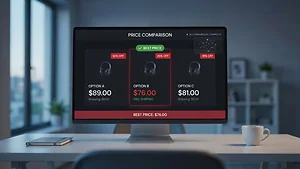
On August 19, 2026, the Federal Trade Commission voted 2-0 to release a proposed Enforcement Policy Statement regarding personalized pricing and to open it for a 30-day public comment period once it is published in the Federal Register. For any business that sets prices online, or that is considering using data-driven or algorithmic pricing tools, this is a development worth watching closely.
What Is “Personalized Pricing”?
The FTC defines personalized pricing as the use of a consumer’s personal data to set prices based on an estimate of how much that specific individual is ...

After the United States of America v. Bradley Heppner decision in February of this year, businesses have been forced to reconsider their use of generative artificial intelligence (“AI”) in the workplace. Though the Heppner case before the United States District Court of the Southern District of New York (the “Court”) was in a criminal law context, the Court’s decision has created uncertainty regarding confidentiality and privilege expectations in a corporate setting, as well. For a deeper dive into the Heppner case, please see our previous article summarizing the case ...

Whether you are an influencer with a million followers or a thousand, if you endorse brands or products, you are required to abide by the Guidelines set forth by the Federal Trade Commission (“FTC”) when making recommendations to your viewership. The FTC’s Guides Concerning the Use of Endorsements and Testimonials in Advertising (“Guidelines”) addresses how advertisers and endorsers can remain legally compliant when promoting businesses, goods, or services (collectively, “Products”) without making “deceptive ads”. Failing to abide by the FTC’s ...
 Through tactical litigation practices, copyright trolls rely on copyright law to allege infringement and threaten major statutory damages upon unsuspecting defendants. The term “copyright troll” is an unflattering nickname for someone who manipulates the intellectual property (“IP”) laws to force a “toll” by way of a settlement payout on market participants.
 Given the ever-changing landscape and increasing popularity of remote work, the use of electronic signatures (“e-signatures”) is on the rise. Business in general is going virtual, causing electronic transactions and online interactions to become more common. To accommodate this new digital environment, legislators have passed laws to permit the use of e-signatures to bind individuals to electronic agreements. In addition to keeping up with the evolution of online business, providing your organization with a reliable e-signature policy is pivotal to ensure clear reliance on and expectations for e-signatures.
 The federal government, states, and some cities set aside a percentage of funding to help women-owned businesses. In fact, in 2021, the federal government set aside 5% of its annual spending for businesses that obtained a Small Business Association (“SBA”) Women-Owned Certification (WOSB).
No matter the reason, when selling a business, it is important that the business owner and advisors understand the broader reasons for the sale to ensure that the deal is structured to achieve the seller's goals.
 This is the second part in a series discussing the Women Owned Small Business (“WOSB”) certification program with the U.S. Small Business Administration (“SBA”). Part One summarizes the eligibility requirements.
This post, Part Two, briefly reviews the certification process and the benefits of certification.
The U.S. and China compete for global dominance in the areas of tech and innovation; however, in an era of global firms and global citizens they must also learn to cooperate.
 This article has been updated with new information since it was originally published on November 16, 2020.
As health care providers continue to face new challenges relating to the COVID-19 pandemic, it is important for providers to maintain compliance with the Health Insurance Portability and Accountability Act of 1996 (“HIPAA”). Although the Department of Health and Human Services Office for Civil Rights (“OCR”) has loosened some requirements to allow health care providers flexibility during the COVID-19 pandemic, a majority of the patient protections under the HIPAA Privacy Rule have remained intact.
With more employees working remotely for the foreseeable future, a resulting increase in spoofing and other hacking attempts is becoming a very common and real threat. It is imperative for a business to have the proper protection policies and procedures in place.
In the following video, moderated by Patricia Scott, attorneys Taylor Gast and Robert Hamor discuss ways to minimize risk and avoid disaster as more employees work remotely. This video touches on the recent rise in computer hacking attempts, along with a discussion on strategies to protect businesses and employees.
Click the thumbnail below to view the full video.
 This video is for general information purposes only and IS NOT LEGAL ADVICE. If you seek legal counsel or need help in determining how this information applies to a specific situation, contact a Foster Swift business & tax law attorney before taking any action.
With the addition of new rules from the SBA (Small Business Administration), business & tax law attorneys Taylor Gast and Mike Zahrt discuss these updates regarding the impact of PPP Loans on Mergers & Acquisitions activity.
 Companies are increasingly tying executive compensation to diversity and inclusion (“D&I”) initiatives in an effort to increase female and minority representation among the workforce and management. Despite progress in recent years, an overwhelming majority of executives in the United States remain Caucasian males. Many companies have previously adopted diversity measures at the directorship-level; however a lack of diversity remains at the management level and among the rank and file employees.
A limited liability company (“LLC”) provides many benefits and protection to its owners. When forming an LLC there are several steps you should take. Below are three key steps to setting up your LLC.
 The Children’s Online Privacy Protection Act (“COPPA”) was enacted in 1998 and was created to address concerns with the online collection of children’s personal information. Recently, the Federal Trade Commission (“FTC”) has announced several large fines for companies not in compliance.
 This is the second part in a series discussing the actions that companies can take to prepare for potential data privacy legislation. Part One summarizes and discusses recently proposed data privacy legislation.
 If 2018 was any indication, cybersecurity compliance should be high on the list of SEC-regulated companies’ priorities in 2019. Take, for example, the SEC’s 2018 enforcement action against Voya Financial Advisor, Inc. (“Voya”) for violation of the Red Flags Rule, which resulted in a $1 million settlement.
 As the business world becomes increasingly more digital, more and more businesses are providing their standard terms and conditions online. Frequently, businesses will then attempt to incorporate those online terms and conditions into their written contracts.
 It's not hyperbole to say that the General Data Protection Regulation's May 25th enforcement date marks one of the largest shifts in the history of privacy laws.
 On December 12, 2017 President Trump signed the National Defense Authorization Act. In part, the Act requires registration of all drones weighing more than .55 and up to 55 pounds, if you plan on flying them outside.
